Quick Summary: Webflow works well for B2B SaaS companies that need a fast, visually polished, and easy to update marketing site without depending on a large engineering team. Custom Webflow development goes beyond templates. It covers Webflow CMS structure, custom integrations, API integration with your SaaS stack, and technical SEO built in from day one. Webflow is not a replacement for your product app. It is usually best for the marketing site, landing pages, documentation, and blog, while your actual SaaS product runs on its own codebase. Hiring a Webflow developer or a Webflow development company makes the biggest difference when you need custom interactions, CMS migration, integrations, or a website redesign that still respects Core Web Vitals and technical SEO. A well built Webflow site can scale with enterprise level traffic, since the platform runs on enterprise grade hosting and a global content delivery network.
Why More B2B SaaS Companies are Choosing Webflow
SaaS companies usually need to move fast. Every week spent waiting for a developer to update a landing page is a week of lost marketing momentum. This is exactly why webflow development has become popular with SaaS marketing teams.
Webflow gives marketing teams a visual editor to update pages themselves, while still keeping the website on clean, semantic code underneath. This balance between speed and quality is hard to find in other no-code platforms.
Unlike many no-code platforms, Webflow generates real HTML and CSS, not proprietary code locked into one system. This matters a lot for SaaS businesses that care about long term flexibility and website performance.
Is Webflow the Right Choice for Your SaaS Business?
Webflow runs on its own custom stack, while marketing website, blog and landing page run smoothly on Webflow platform. It is very practical setup for your website and brand building.
This is probably the most common question we get from SaaS founders and marketing leads. The honest answer depends on what you are trying to build.
Webflow is usually a strong fit if:
- You need a fast, responsive website that looks great on every device
- Your marketing team wants to publish and update content without waiting on developers
- You care about page speed, Core Web Vitals, and technical SEO from the start
- You need custom integrations with tools like HubSpot, CRMs, or your product’s API
Webflow is usually not the right tool if:
- Your entire product experience needs to live inside the same codebase as your app
- You need extremely complex, custom backend logic beyond what APIs and integrations can support
Most successful B2B SaaS platforms actually use a mixed approach. This is a very common and practical setup, not a compromise.
What Makes Custom Webflow Development Different?
Anyone can drag a few elements around in Webflow. Custom Webflow development is a different level of work entirely, and this is where Webflow experts actually earn their value.
Custom Webflow development usually includes:
- Custom interactions and animations that go beyond built in templates
- Advanced Webflow CMS structures for blogs, case studies, and resource libraries
- Clean, accessible, and well structured code that supports technical SEO
- Custom integrations connecting Webflow to your CRM, analytics, and product APIs
- Careful attention to responsive web design across every breakpoint, not just desktop and mobile
A generic template can get a small business online quickly. But a growing SaaS company usually needs a scalable website that reflects its brand, supports its sales funnel, and connects properly with the rest of its marketing stack.
Webflow CMS and Content Structure for SaaS Websites
Content is a huge part of B2B SaaS marketing, from blog posts to case studies to product pages. This is where Webflow CMS becomes genuinely useful.
Webflow’s CMS lets teams manage structured content through collections, similar to a database, without needing to touch code for every new blog post or case study. The CMS API allows businesses to programmatically create, manage, and publish content, and even connect external systems to automate content workflows.
For a SaaS website with a lot of moving content, this means your marketing team can publish faster, while your Webflow developer sets up the structure once and reuses it across the entire site.
Connecting Webflow with your SaaS Stack
B2B SaaS businesses usually run on a stack of tools. CRMs, email marketing platforms, analytics, and payment systems all need to talk to each other. Custom integrations and API integration work is where a lot of the real engineering happens in a Webflow project.
Common integrations for SaaS marketing sites include:
- CRM tools for capturing and routing leads
- Marketing automation platforms for nurturing signups
- Analytics tools for tracking conversion optimization efforts
- Payment tools for handling upgrades, trials, or one-time purchases
If your SaaS website ever needs to collect payments directly, whether for an upgrade page or a one-time purchase, the integration usually connects to a payment provider through its API. Stripe’s own documentation explains how a PaymentIntent object tracks a payment from creation through checkout, which is the same pattern a Webflow developer would connect to through a custom integration or a form based workflow.
Webflow, Website Performance, and Core Web Vitals
Page speed is not just a technical detail. For a SaaS company running paid campaigns and organic search traffic, website performance directly affects conversion rates and search rankings.
Google measures real world page experience through Core Web Vitals. As per Google’s official Core Web Vitals documentation, a good experience means Largest Contentful Paint under 2.5 seconds, Interaction to Next Paint under 200 milliseconds, and Cumulative Layout Shift under 0.1, measured using real visitor data.
Webflow generally performs well here because it handles hosting, image optimization, and clean code generation automatically. But a poorly built custom Webflow development project can still slow things down through heavy custom code, unoptimized images, or too many third party scripts. This is exactly why hiring webflow experts who understand performance matters, not just visual design.
Webflow and Technical SEO
SEO is often the deciding factor for SaaS companies choosing between Webflow and other platforms. The good news is that Webflow supports the fundamentals well, but only if it is set up correctly.
Google’s SEO Starter Guide explains that SEO is about helping search engines understand your content while helping users decide whether to visit your site through search. This includes clear titles, clean URL structures, and content organized around what your users actually need.
A Webflow developer experienced in technical SEO will usually handle:
- Clean URL structures and proper heading hierarchy
- Structured metadata for every page and CMS collection
- Fast loading pages that support both users and search engines
- Proper redirects if the project involves CMS migration from another platform
Mistakes That Slow Down SaaS Websites
Even with a good platform, mistakes during a website redesign or new build can hold back results. Here are the ones we see most often.
- Skipping proper Webflow CMS planning, leading to messy content structure later
- Adding too many custom animations that hurt website performance
- Ignoring mobile experience during UX design and UI design decisions
- Launching without setting up proper redirects during a CMS migration
- Treating the marketing website and the actual SaaS product as if they need identical technology
Avoiding these mistakes usually comes down to working with an experienced webflow developer who has handled SaaS projects before, rather than a generalist unfamiliar with B2B buying cycles.
When Should You Hire a Webflow Developer?
Not every project needs outside help. A simple landing page update might be fine for an in-house marketing team. But there are clear moments when it makes sense to hire webflow developer support.
You should probably bring in help when:
- You are planning a full website redesign and need it done right the first time
- Your current site needs custom integrations with your CRM or product APIs
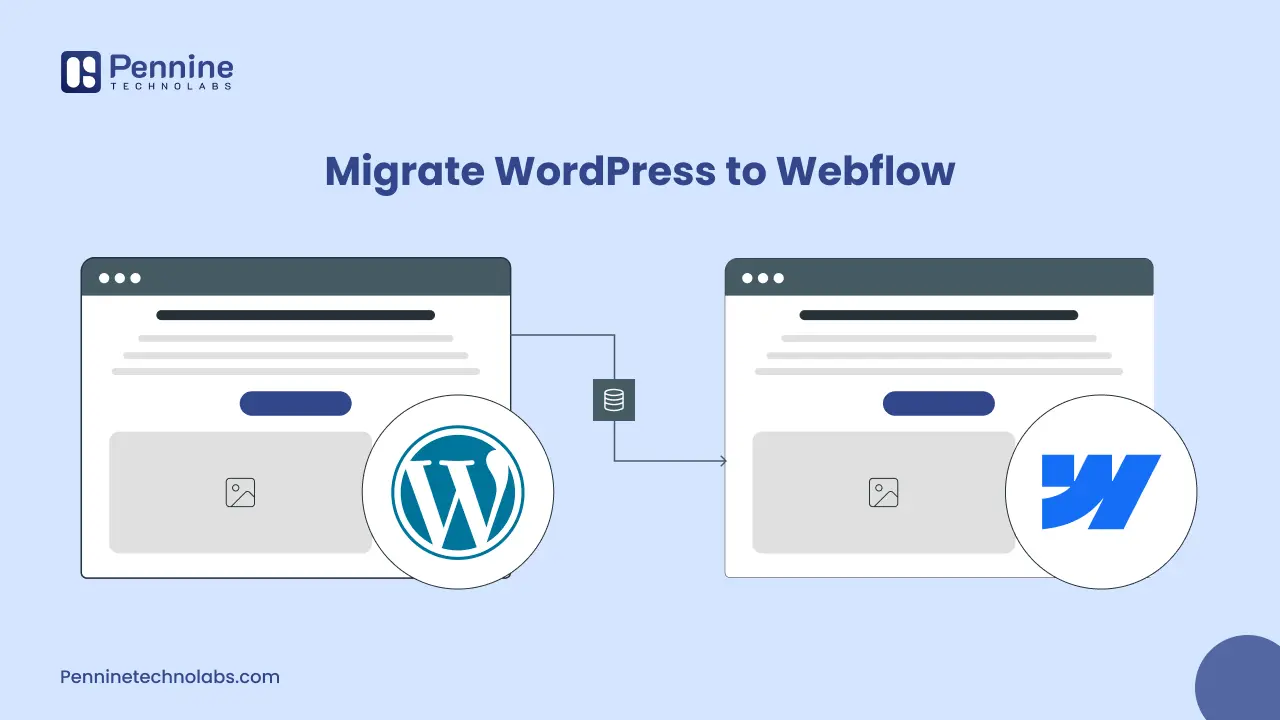
- You are migrating from WordPress or another CMS and want to protect your SEO
- Your growing content library needs a properly structured Webflow CMS setup
- Your team lacks the bandwidth to maintain design consistency across a growing site
If your business is going through this exact situation, our earlier guide on migrating a WordPress website to Webflow walks through the process in more detail, including how to protect existing rankings during the move.
Can Webflow Handle Enterprise-Level Growth?
This is a fair question for any SaaS company planning. The short answer is yes, with the right setup.
Webflow’s hosting infrastructure is built to handle traffic spikes and large content libraries without requiring businesses to manage their own servers. For most B2B SaaS marketing sites, this removes a whole category of infrastructure work that used to require a dedicated DevOps setup.
That said, a scalable website still needs ongoing attention. Content grows, integrations change, and new campaigns need new landing pages. Treating your website as a one-time project rather than an evolving system is one of the most common reasons growth slows down after launch.
Final Thoughts
Webflow has become a genuinely strong choice for B2B SaaS companies that want a fast, flexible, and easy to manage marketing website. But the platform alone does not guarantee results. The difference between an average site and a genuinely high performing one usually comes down to the people building it.
A skilled Webflow development company brings together custom Webflow development, Webflow CMS structure, technical SEO, and the integrations your SaaS business actually needs. That combination is what turns a nice looking website into one that actually supports growth.
Pennine Technolabs Webflow Development Agency
If you are exploring webflow development for your SaaS business, or thinking about a website redesign that finally keeps up with your product roadmap, it helps to talk to a team that has done this before.
Pennine Technolabs works as a dedicated Webflow development company for SaaS and enterprise clients, covering everything from custom Webflow development and Webflow CMS setup to integrations, performance, and long term website maintenance. You can see how this comes together on our Webflow development services page.
Whenever you are ready to talk through your project, reach out to Pennine Technolabs and our team will help you figure out the right approach for your SaaS website.