Quick Summary: Travel CRM development brings lead capture, customer profiles, quotations, follow-ups and booking status into one connected system, replacing scattered spreadsheets, inboxes and WhatsApp threads. It works best when built around travel-specific data like destinations, dates, traveller counts and budgets, with automation handling follow-ups without replacing agent conversations.
Tour operators run their sales process across too many places at once. A lead arrives through a website form, a WhatsApp message answers a pricing question, a quotation sits half-finished in an email draft, and a follow-up gets noted on a spreadsheet nobody updates. Add a few staff members, several destinations and repeat travellers who expect their preferences remembered, and the cracks start to show.
This is the operational problem Travel CRM development is meant to solve: bringing enquiries, customer records, quotations, follow-ups and bookings into one system built around how a travel business actually sells.
What Is Travel CRM Development?
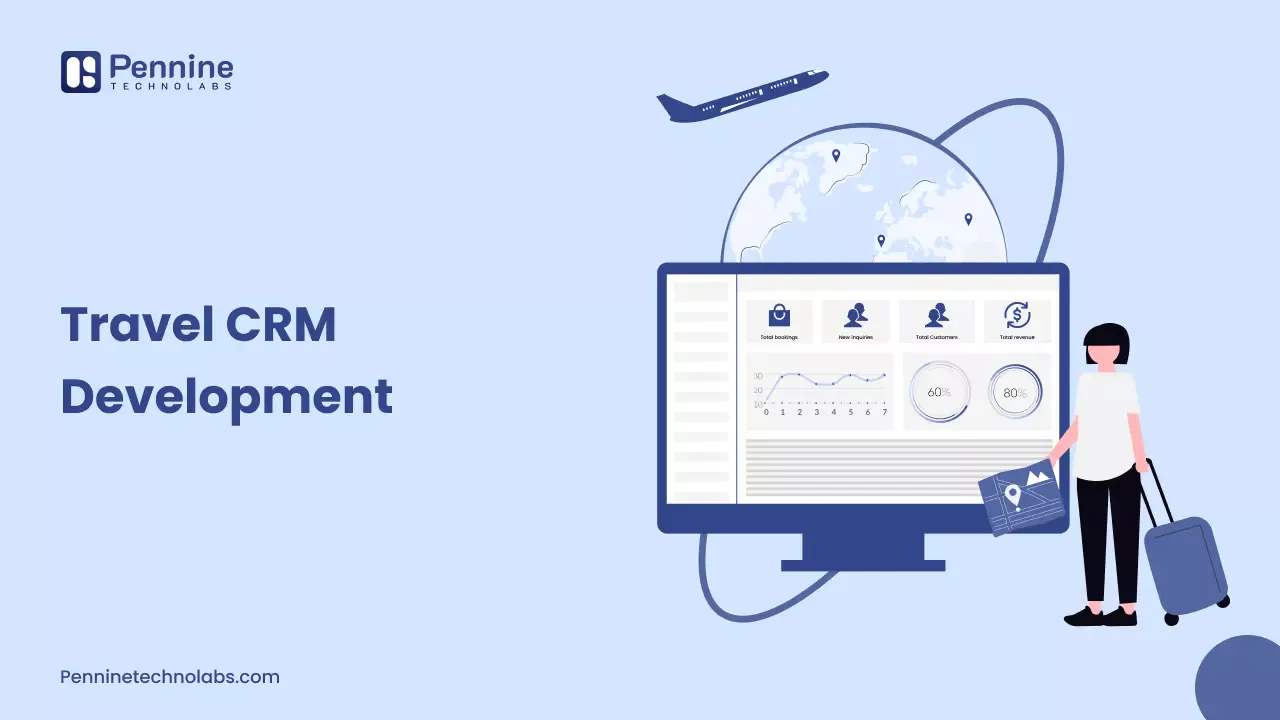
Travel CRM development is the process of designing or customising CRM functionality around the sales, customer and operational workflows of a travel business, rather than installing a generic contact tool and hoping it fits. A standard CRM tracks names, emails and deal values. A travel-specific one tracks trip enquiries, destination preferences, travel dates, traveller counts, budget range, previous trips, package interest, quotation status, follow-up schedules, booking status and communication history.
This differs from Travel and tourism Web App Development, which focuses on the booking platform and customer-facing website rather than the sales layer behind it. A family enquiring about a two-week itinerary might take weeks to decide and ask for several revised quotations, and a CRM built for travel shapes its data structure and pipeline stages around how trips actually get sold.
Why Tour Operators Need a Travel CRM
Most tour operators do not lack customers. They lack a reliable way to track what is happening with each one. Leads come in from the website, phone, email, social media and WhatsApp, often landing in different inboxes handled by different staff, so follow-ups get missed simply because nobody realises an enquiry from three days ago never received a reply.
Repeated data entry is another common problem. A customer’s details get typed into a spreadsheet at the enquiry stage, then retyped into a booking system and again into an invoicing tool, and each retype is a chance for an error.
A travel CRM addresses this by giving every enquiry a single record that moves through defined stages, from new enquiry to quotation sent to booking confirmed. Managers can quickly see how many leads are waiting for a quotation, which agent is handling each customer and which enquiries still need a response.
Essential Travel CRM Features
Choosing CRM Software for Travel Agency usually comes down to which of the following capabilities are included and how well they reflect real travel sales workflows.
Lead and enquiry management captures requests from every channel, including website forms, email, phone logs, social media and WhatsApp, and records each as a single enquiry rather than a message buried in someone’s inbox.
Customer profiles hold travel preferences, previous trips, group composition, communication history, special requirements and budget range, so a repeat customer’s history is visible from the first message.
Travel-specific lead qualification tracks destination, travel dates, traveller count, trip type, budget, package interest, urgency and lead source, letting a manager prioritise enquiries by what matters commercially.
Sales pipeline management structures deals through stages such as new enquiry, quotation sent, follow-up, negotiation, booking confirmed and repeat customer, giving visibility into where deals stall.
Quotation management ties each proposal to its enquiry record and flags when a follow-up is due, since operators often send two or three revisions before a customer books.
Follow-up automation sets reminders after defined intervals, so a quotation sent on Monday triggers a check-in on Thursday without anyone needing to remember.
Booking status updates automatically where the CRM connects to a booking system, keeping sales, operations and finance aligned.
Communication history gives any team member who opens a customer’s file the full picture, which matters when a traveller speaks with several staff before, during and after a trip.
Task management assigns follow-up actions to specific people with due dates, removing the ambiguity of a shared inbox.
Reporting covers lead sources, conversion rates, pipeline value, agent performance and repeat customer rate, showing which channels actually produce bookings rather than just enquiries.
Travel CRM Integrations
A CRM project should treat integrations as core scope rather than an afterthought. It often needs to connect with the business website or travel web app, a booking engine, email marketing tools, payment systems, accounting or ERP software, support tools, WhatsApp and calendar systems. Not every travel business needs the same integrations. For example, a small tour operator may only need a website form, booking system and email tool. A larger travel company managing many agents and suppliers may need several more systems to keep everything connected.
The pattern usually runs the same way: a website or travel web app captures the enquiry, that record flows into the CRM, the sales team manages follow-up from there and post-trip data feeds future marketing. This is why travel CRM development sits close to broader Travel and tourism Web App Development work. Businesses rebuilding a booking platform alongside a CRM project can find more detail in our Travel Web App Development Guide.
CRM Automation for Tour Operators
Automation only earns its place when it removes real manual work. A few workflows come up repeatedly in travel CRM development projects.
New enquiry automation creates a lead record when a visitor submits an enquiry, assigns it based on rules such as destination or workload and creates a first follow-up task.
Quote follow-up sets a reminder after a defined period once a quotation goes out, notifying the agent if the customer has not responded.
Pre-trip communication starts once a booking is confirmed, covering documentation reminders and departure details timed against the travel date.
Post-trip follow-up triggers a feedback request and, after a suitable interval, a relevant future offer once a trip is complete.
Repeat customer automation uses travel history to segment customers, so a family that booked a beach holiday receives different communication than a solo adventure traveller.
None of this replaces a human conversation at the points that matter. It removes the repetitive administrative steps around those conversations.
Custom CRM for Travel Agencies vs Off-the-Shelf CRM
Not every travel business needs a fully custom system. Standard CRM software, configured with travel-specific fields and pipelines, is often enough for a smaller operator running a straightforward process with one or two staff handling enquiries.
Custom CRM for travel agencies becomes the better option once standard tools start working against the business: qualification has become too specific for standard fields, quotation workflows involve revisions generic pipelines cannot represent, the business needs a proprietary supplier integration or user roles need a more complex structure than most off-the-shelf CRMs assume.
Custom development is not automatically the better choice. It costs more and takes longer to launch than configuring existing software, so the right answer depends on how far a business’s workflow has moved from what standard tools assume.
Where Does GoHighLevel Fit?
GoHighLevel is worth considering when a business’s core requirement is lead capture, pipelines and follow-up workflows across email and SMS rather than complex booking or traveller data. GoHighLevel CRM automation handles the marketing and sales side well for smaller operators who need one tool for enquiries and nurture sequences.
Where it tends to fall short is deeper travel-specific functionality, including complex booking data structures and integrations with proprietary reservation systems. A business with those requirements often uses GoHighLevel for marketing while commissioning custom CRM development for the operational side, rather than treating it as a full replacement.
How Much Does Travel CRM Development Cost?
There is no fixed price, because cost depends on variables that differ from one business to the next: number of users, workflow complexity, integrations required, data migration, UX requirements, automation and reporting depth, mobile access and ongoing maintenance.
It helps to separate the categories a buyer is choosing between. An off-the-shelf subscription is the lowest upfront cost, with standard features and limited customisation. CRM customisation configures an existing platform with travel-specific fields. Custom development builds functionality from the ground up. Integration work connects the system to booking engines and payment tools, and ongoing support covers maintenance as the business grows. Which of these quotes covers matters more than comparing headline numbers between vendors.
When Should a Travel Business Invest in Custom CRM Development?
A few signals suggest it is worth evaluating: sales teams relying heavily on spreadsheets, leads getting lost between channels, customer information scattered across places, inconsistent follow-ups, a booking system and CRM that do not share data, or a business growing fast enough that manual coordination is breaking down.
Not every travel company needs to reach this point, and plenty run well on properly configured standard software. These signals are a starting point for the conversation, not a checklist that automatically points to custom development.
How to Choose a Travel CRM Development Company
Selecting a development partner is less about comparing feature lists and more about evaluating how well they understand travel sales operations before writing any code. Worth asking about directly: genuine travel industry understanding, prior CRM development experience, integration expertise with booking engines and payment systems, UX understanding for sales teams, data security practices, testing processes, scalability and post-launch support.
The strongest signal is whether a partner asks about your actual sales process before proposing a solution, since a team that understands how you qualify leads and follow up will design a system that fits daily operations rather than one that needs workarounds within a month. Businesses evaluating a broader technology partner for both CRM and web platform work can review the best Travel CRM Software for Travel Agencies by Pennine Technolabs’ travel industry expertise.
Final Thought
Travel CRM development works best when scoped around how a business actually sells trips, not around a generic feature list. If enquiries, quotations and follow-ups are scattered across systems that do not talk to each other, Pennine Technolabs can help map the right approach, whether that means configuring existing software or building something custom. Reach the team at biz@penninetechnolabs.com or +91 9213658393 to talk through your requirements.