Quick Summary: Web design trends focus on improving user experience, performance, accessibility, and visual storytelling. This guide covers the most crucial web design trends shaping modern websites, helping businesses and designers create engaging and future-ready digital experiences.
Web design is entering a whole new phase. Web design trends in 2026 focus on usability, speed, accessibility, and immersive experiences rather than visual complexity. Every click, scroll, and every interaction is becoming personal and responsive. The brands are no longer trying to show off heavy graphics to users. They would like to make the experiences seamless and effortless, and intelligent.
If you are creating a site in 2026, you should be aware of how the design world is evolving. The industry trends below indicate the direction it is heading and how you will keep up.
What is Web Design in 2026?
In 2026, Web Design is a blend of creativity and intuition. Websites have become smart digital places. They know what the user wants, they guess the user’s path, and display information naturally. The design centers on a simple structure, real-time response, a voice interface, dynamic layout, and depth-rich graphics.
Web Designers also collaborate under the premise that a site should resemble a conversation rather than a static page. It is the foundation of modern digital presence.
What are the Current Trends in Web Design?
The website trends in 2026 are based on clarity, speed, intelligence, and emotion. Website users want a clean screen view, quick response, and smoother navigation. Personal recommendations, immersive visuals, motion-based interaction, and smoother storytelling have been introduced in modern websites.
Brands are utilizing lighter designs and more experience without losing speed. This balance has become the most significant aspect of white-label web design services.
Top Web Design Trends to Watch in 2026
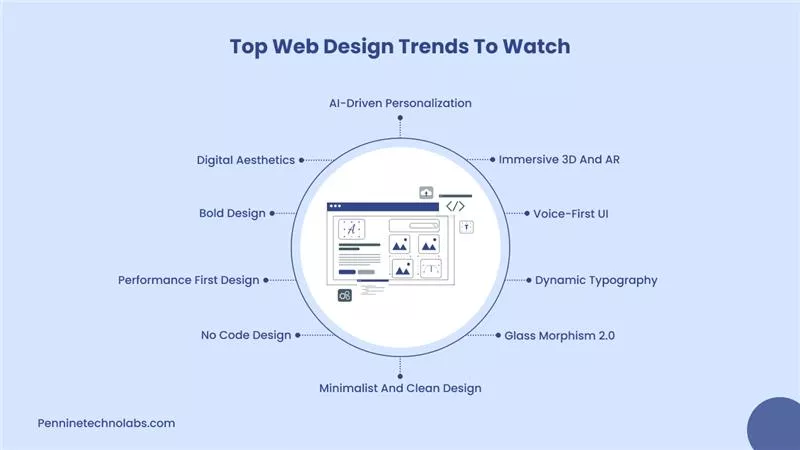
AI-driven Personalization
AI is not just a chatbot now. Artificial Intelligence (AI) is also significant in the structure of the website. In 2026, custom AI development services will adapt according to what the user is doing and what he/she may need next.
It is like visiting a website and, at a glance, seeing items that suit your taste or content that seems written to you. It is the new stage of personalization. It makes it more comfortable and prolongs the user’s attention.
AI website design can also help the site eliminate friction by optimizing the menu, highlighting critical areas, and guiding the user through a natural progression.
Immersive 3D and AR
The internet is becoming more tactile. Light 3D elements and a stable AR support will allow brands to develop experiences that are close to the real world.
Design a website where users can view a product in their room, navigate a virtual apartment, or see a product from all angles.
3D and AR website design is gaining popularity across fashion, real estate, furnishings, gaming, and education industries. It also makes the experience immersive without heavy devices and helps the user understand a product without having to guess.
Voice-first UI
Voice commands are becoming popular. Having smart speakers and voice assistants everywhere, users feel more at home talking to machines.
Voice search, voice-guided navigation, and voice-assisted actions have been integrated into websites.
This ensures faster browsing and helps users who want hands-free browsing. It also enhances ease of use for users who struggle with conventional navigation. Voice-first UI design is now emerging as the mobile-centric website design.
Dynamic Typography
Typography is leaving behind its traditional role. Text now moves, responds, and changes beautifully in response to the layout.
Outsource web design to india to build Typography website with animated headings, responsive fonts, and expressive text placement.
The trend also allows the brands to be personality-expressive without excessive visuals. It also enhances narration by regulating the speed and flow.
Glass Morphism 2.0
The original glass effect made designs look dreamy, but in the process, it slowed down websites’ speed. The new Glass Morphism 2.0 web design is clean, lighter, and stable.
The feeling of softness, soft blur, floating layers, and smooth depth is modern and offers a premium feel. It suits well with a simple layout and futuristic visual designs.
The new design is also concerned with readability to provide the user not only with beauty but also with clarity.
Minimalist and Clean Design
Minimalism is still the most prominent principle of modern Website design. Users like to read messages without having to work hard to understand the information. A clean design makes the mind relax and instantly improves engagement.
The brands employ proper fonts, appealing colors, balanced spacing, and minimal motion in place of clutter and heavy graphics. This also improves SEO because faster pages are more highly ranked on Google and perform well on AI-powered search engines such as Google AI Overviews.
No Code Design
No-code platforms are transforming the website design Market. Webflow website development and similar platforms allow web designers to create sophisticated layouts, clean interactions, and full landing pages without a lengthy development process.
This is the reason why startups and expanding businesses are adopting no-code systems. They are provided with the power to edit visuals and output a professionally developed website. Website design services mean more time to be creative and less time spent solving recurring technical problems.
Performance First Design
Website Speed has been a significant ranking parameter. The 2026 design practice is littered with quicker loading, cleaner code, and purposeful aspects.
UI UX Designers use miniature graphics, small animations, and native web functionality. Performance-first web design means the site must load quickly and respond quickly. It enhances conversions, improves SEO, and increases user satisfaction.
The brands that are conscious of speed automatically secure their spot in the Google SERP.
Bold design
Bold design is making a comeback, but with more structure. Bold typography, strong color combinations, expressive visuals, and experimental layouts help brands make a confident statement.
Bold does not mean loud. It means clear, intentional, and memorable to your website visitors. Bold Web design helps build identity and makes the user remember the experience long after they leave the page.
Digital Aesthetics
Digital Aesthetics represents the modern internet culture. The floating forms, clean gradients, neon-inspired glows, gentle motion, and soft elements have formed their own personality.
Users are pleased with refined, playful images. This does not slow down performance because this style is catchy and makes the page vibrant. It includes creative, tech, portfolio, and lifestyle brands.
Hire a Website Designer to Follow the Trend
Trends evolve every month and year. To stay ahead, hire a Website Designer who understands modern behavior, creative presentation, and technical website performance.
A talented Web Designer in India will guide you to relatable and relevant website themes for several years.
They create a site that aligns with your brand personality without compromising loading speed or appearance, and that leaves a positive impression. To get a site that will be memorable in 2026, hiring an expert web designer is the most intelligent move.
Pennine Technolabs Website Design
Pennine Technolabs, a website design company, develops creative, performance, and future-ready websites. Our web designers focus on clarity, speed, and human-centric experiences. Our layouts are crafted to make navigation smooth and easy, while still telling your brand story.
Pennine Technolabs’ web developers team can build an e-commerce site, a service site, or a complete business platform. We create contemporary, meaningful digital experiences.
Visit penninetechnolabs.com to find a website designer in the USA for the latest web design and development services.
Conclusion
In 2026, Web design will be a movement towards intelligent simplicity. Websites are becoming personalized, reactive, and aesthetic without unnecessary complexity. The new trends in modern design include AI-based behaviour, 3D immersion, voice activation, simple layouts, digital design, and performance-based construction.
Companies that embrace such trends early will provide a better, more interactive experience for their users. An effective website will not just be appealing. It builds trust, boosts conversions, and strengthens your online presence in the long term.
FAQs on Web Design
Why are Web Design trends significant?
Web design Trends are essential to follow to stay relevant in the industry and to offer your visitors the best, up-to-date information. This shows your behaviour towards people who want to experience digital experiences.
How often should a Website be redesigned?
Usually, a website should be redesigned within 3-4 years to stay within the design standards. The website should not look outdated and slow. A timely redesign keeps your brand competitive and user-friendly.
Can we improve functionality with the trending Web Design?
Yes, we improve functionality with trending web design practices. Modern design trends are not just about visuals; they directly enhance usability, speed, and conversions.
Does updating design help improve SEO performance?
Yes. Google rewards sites with better structure, faster speed, straightforward navigation, and strong mobile usability. Modern design directly impacts these factors and boosts SEO.